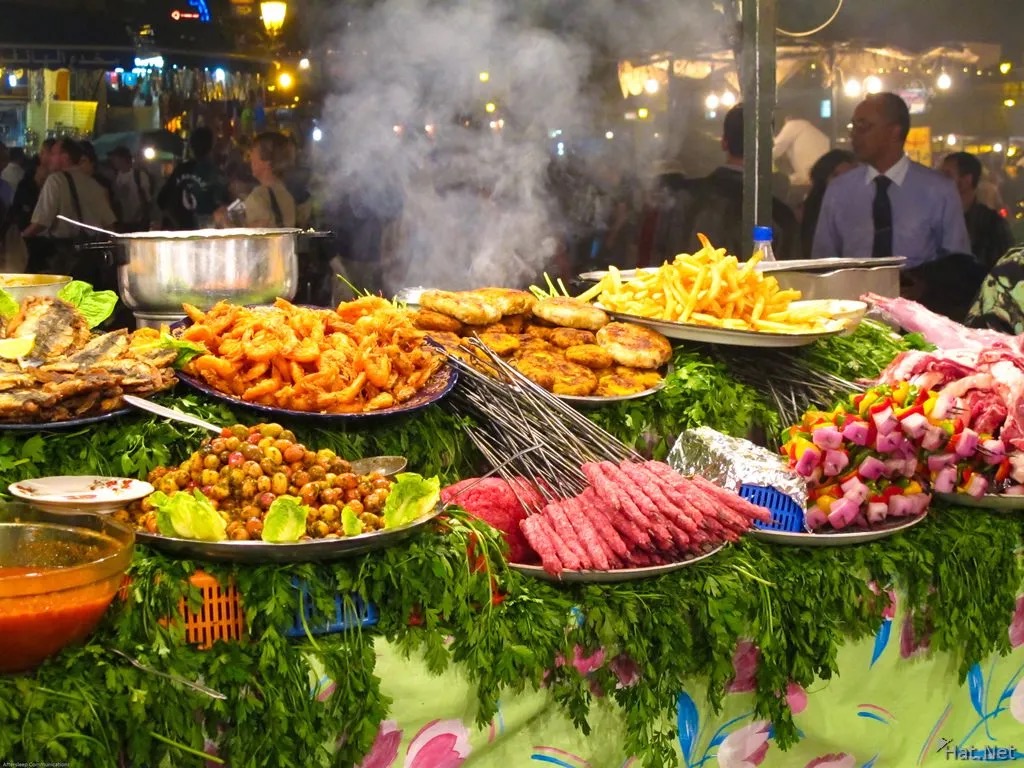
The best eating in Marrakech is not in the hotels. It is in the medina, off the side streets around Jemaa el-Fnaa, in shops the size of a garage and at stalls that fold up at midnight. Moroccan street food is a fusion of Berber, Arab and Mediterranean influences, cooked in tagines and wood-fired ovens that have not changed in centuries. Follow the smoke, follow the local crowd, and you will eat better than any restaurant with a TripAdvisor badge.
Breakfast: msemen and b'ssara
Start the day with msemen, a square layered flatbread griddled until crisp on the outside and soft inside, eaten with honey and butter or dipped in a bowl of olive oil. You find it at corner bakeries and morning stalls around Bab Doukkala for MAD 5 to MAD 10 a piece. For something more filling, find Lamsaffah, a tiny soup shop off Rue Bab Doukkala, and order b'ssara, a thick soup of dried fava beans blended with olive oil, garlic and cumin. A bowl costs MAD 15 and comes with fresh bread and a handful of olives. It is a working class breakfast, eaten standing, and it is one of the best things you will taste in Marrakech.
Lunch: tangia and mechoui
Tangia is the dish Marrakech is most proud of and the one tourists miss. It is slow-cooked lamb, seasoned with garlic, cumin, preserved lemon and saffron, sealed in a clay urn, and buried in the ashes of a hammam oven for six to eight hours. It is historically a men's dish, made by male friends for Friday lunch. The place to try it is Hadj Mustapha, a no-frills shop near the Rahba Kedima square, where a portion of tangia with bread runs MAD 60 to MAD 80. The meat falls off the bone and the broth is spooned over the bread.
Mechoui is the other slow-cooked lamb, roasted whole in a pit oven until the outer skin crackles. The best stall is near the olive souk, just off Jemaa el-Fnaa on the Rue des Souks side, where the butcher weighs your portion on a scale and serves it with cumin salt and bread. Expect MAD 120 to MAD 150 a kilo, a quarter kilo is enough for one. They sell out by 1pm, so go early.
Dinner: pastilla and the night stalls
Pastilla is the dish that confuses first-timers. It is a filo-like pastry, layered with either pigeon or chicken, ground almonds, cinnamon and sugar, then baked until the top is dusted with icing sugar and the inside is savoury. The sweet and savoury combination is eight centuries old. La Maison Arabe, a famous riad hotel, serves one of the cleanest chicken pastillas in the city, around MAD 180 as a starter in their restaurant. For a street version, look for the pastilla stalls on the southern edge of Jemaa el-Fnaa after dark, where a small portion costs MAD 40.
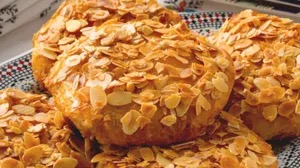
At night the square fills with the numbered food stalls. Eat where the locals eat, the stalls with queues of Marrakchi families not tour groups. Briouats, deep-fried savoury pastries stuffed with meat or vegetables, cost MAD 10 to MAD 20 each. Grilled merguez sausages in a bun run MAD 30. Snail soup, a Marrakech specialty, is MAD 20 a bowl and believed to be a cure for hangovers. Finish with chebakia, sesame cookies coated in honey and shaped like a rose, sold by weight at around MAD 80 a kilo, or grab a handful for MAD 10.
Safety and a few rules
Pick stalls with high turnover, the food is fresher. Watch whether the vendor handles money and food with the same hand, if they do, walk on. Drink bottled water, not tap, even for brushing teeth. Avoid raw salads at street stalls, they are often washed in tap water. Eat where the locals eat, pay in cash, carry small change, and you will eat your way across the medina for under MAD 200 a day.