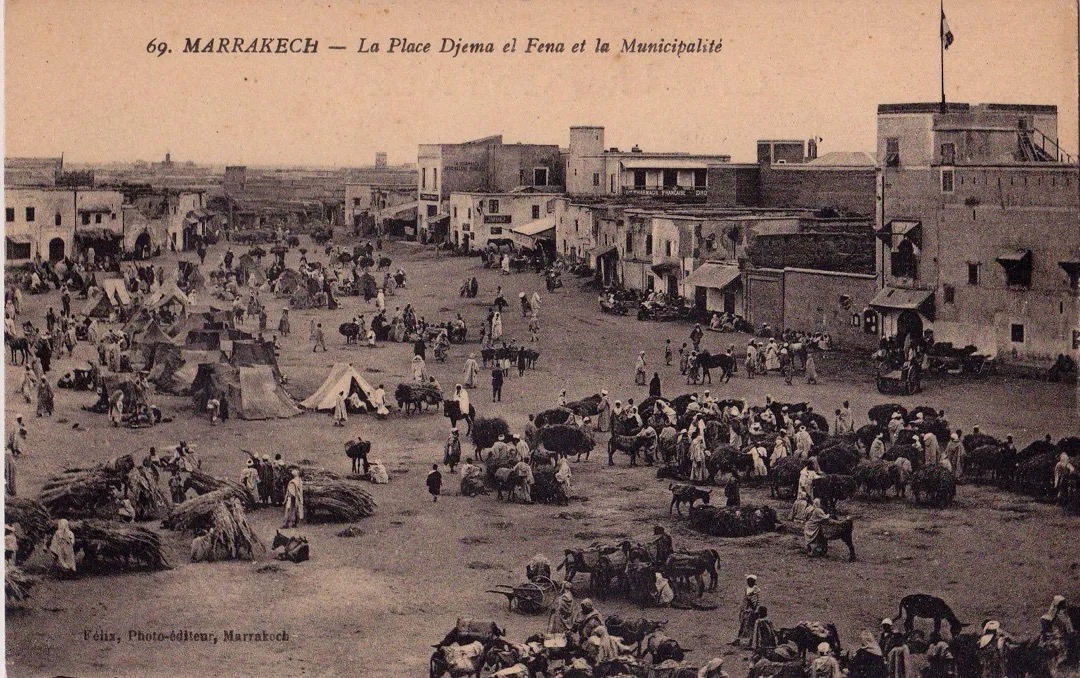
Step off any medina side street and you walk straight into Jemaa el-Fnaa, the open-air theatre that has run continuously in the middle of Marrakech since the 17th century. The name is darker than it sounds. A Saadian prince began a mosque here and called it Djemaa el-Hna, the mosque of happiness. Construction stopped, the project collapsed, and locals flipped the name to el-Fna, meaning demolition and ruin. The square kept that edge for centuries. Sultans rallied armies here, weekly markets sold wheat and livestock on Thursdays, and criminals were executed in public. A British historian recorded 45 beheadings in a single day in 1867. In 1864, 400 quintals of gunpowder stored in a hotel blew up at sunset and killed 300 people. None of that grit survives today. What survives is the loudest, brightest, most photographed plaza in Morocco.
By day: juice, snakes and henna
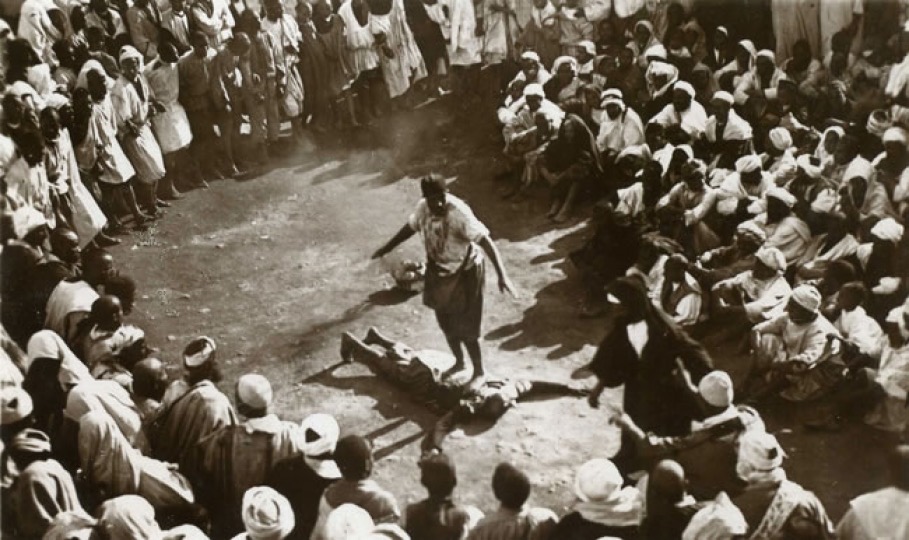
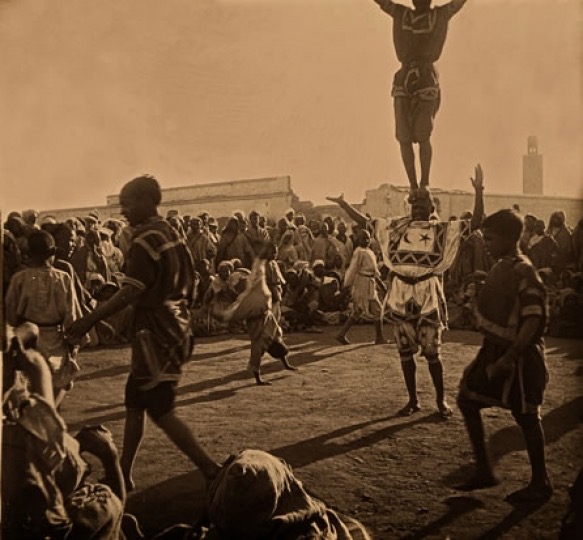
Walk out before 10am and the square is still soft. Rows of orange juice stalls line the southeast corner, each one stacked with pyramids of fresh oranges at around MAD 10 a glass. Snake charmers work the centre with cobras and puff adders, hoping you drop a coin for a photo. Henna artists sit on low stools with pattern books, charging MAD 50 to MAD 150 for a hand or foot design. Monkey handlers from the Atlas region pose Barbary macaques on leads for tourists. Storytellers set up circles in the early morning, telling Berber legends in Darija Arabic to crowds of locals. Fortune tellers, astrologers and tooth pullers all hold court somewhere on the stone.
By night: the food stalls roll in
At dusk the square changes completely. Donkey carts drag in numbered food stalls, hundreds of them, and the charcoal smoke hits you before the smell does. Stall 1 is famous for harira soup and cheap bowls of snails in spiced broth at MAD 20. Stall 14 is the one locals queue for, grilled lamb kebabs and merguez sausages straight off the coals, about MAD 60 a plate. Stall 32 does the best fried fish and calamari in the square, around MAD 80 with bread and chips. Look for the stalls with the biggest local crowd, not the ones with touts handing out menus. A meal with bread, salad and a main runs MAD 50 to MAD 100. Drink the sweet mint tea they pour from height, it is how Moroccans wash down grilled meat.
Haggling and the rooftop view
The stalls on the edge of the square sell everything from dried fruit to leather slippers and the asking prices are for tourists. Start your offer at 40 percent of what they ask, walk away once, and you usually land around 50 to 60 percent. Never name a price you are not willing to pay, once you say it, you are committed. Cash only, dirhams only, no card machines out here.
When the smoke and noise get heavy, climb to a rooftop cafe. Cafe de France on the north side of the square is the classic choice, three floors up with a full view of the food stalls and the Koutoubia minaret. A pot of mint tea runs MAD 35 and the terrace fills by 7pm, so go early. Cafe Glacier and Cafe Argana are alternatives on the same side, all with terraces above the fray. You are walking distance from anywhere in the medina, follow the sound of the drums and you will find it.
Jemaa el-Fnaa is not a museum piece. It is a working square that reinvents itself twice a day. Go in the morning for the calm, go back at night for the chaos, and you will see why UNESCO listed it as a Masterpiece of the Oral and Intangible Heritage of Humanity.